9+ curated guides • Updated August 2025
Ever wonder if sharing a birthday with a celebrity means you share a sliver of their destiny? Today isn't just another day on the calendar; it's a cosmic connection point. We're going beyond the headlines to decode what your celebrity birthday twin's life path—their struggles, triumphs, and pivotal moments—can reveal about the untapped potential waiting within you. This isn't about simple fandom or surface-level astrology. It's a deep-dive into the narrative architecture of success, using a life lived in the spotlight as a tangible case study for your own journey. We'll map the archetypes of stardom and translate their blueprints into actionable strategies for your own ambition.
You've seen it a thousand times, gleaming in a fresh piercing or nestled in a seasoned collection. The simple ball closure ring is so ubiquitous in body modification it's almost invisible. But what if this humble object is more than just a starter piece, but a quiet masterpiece of engineering and a powerful symbol of identity? As a design historian, I argue that to understand the ball closure ring (BCR), you must disregard its context as mere jewelry and analyze it as you would an Eames chair or a Dieter Rams radio. It is a sublime example of industrial design, a self-contained system where form and function are so perfectly fused they become one. It is an artifact that tells a story not of luxury, but of mechanical elegance and subcultural rebellion.
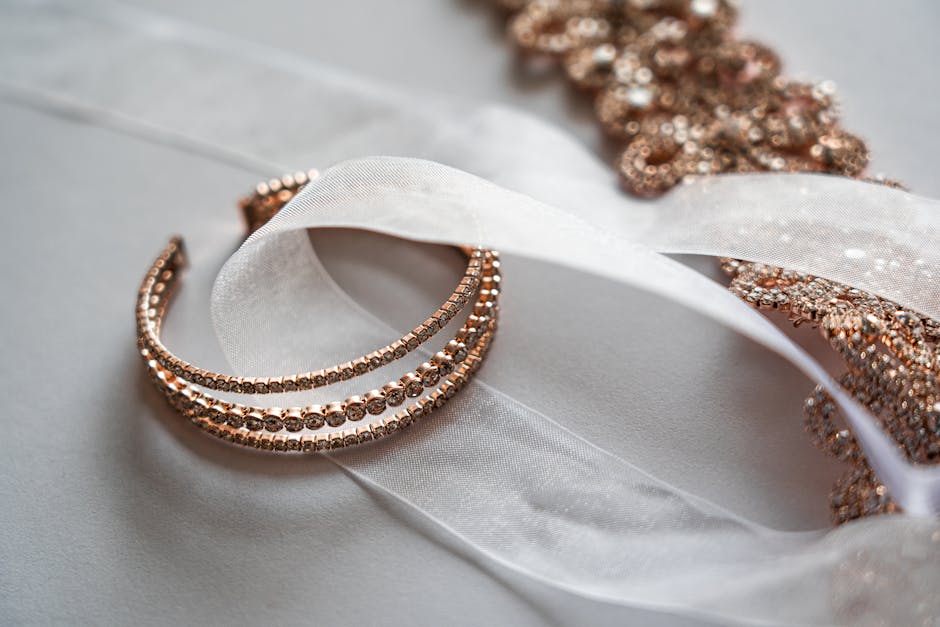
That gaudy Art Deco brooch you inherited might be more than just a pretty accessory. Tucked away in jewelry boxes across the world are pieces made from some truly wild materials—think plastic derived from milk and even glass that glows under a blacklight because it’s radioactive. Before you dismiss your vintage finds as simple 'costume' pieces, let's uncover the forgotten science that makes them truly remarkable. As a collector who lives for the story behind the object, I find that the real treasure isn't just the design, but the audacious, experimental, and sometimes downright bizarre materials that artisans and chemists of the past used to craft these miniature works of art. This is where history, chemistry, and fashion collide.
A 20-gram gold necklace is a significant purchase, but are you getting the most out of every single gram? Many buyers focus on the current price, not realizing that certain designs can make your necklace look far more substantial and luxurious, while others quietly diminish its value through hidden costs. This guide exposes the jeweler's secrets to choosing a piece that's both a stunning statement and a smarter asset. As someone who views gold not just as an adornment but as a wearable, appreciable asset, I see the common mistakes investors make. They fixate on purity and weight, which are crucial, but they completely ignore the third pillar of a smart jewelry purchase: design efficiency. We're not just buying a bullion bar to wear around our neck; we're investing in craftsmanship and presence. Let's delve into how to make those 20 grams perform like 40.
Anyone can make an entrance, but the real power lies in the exit. We'll show you why the most overlooked piece of jewelry is actually a secret weapon for confidence, designed to captivate attention long after you've walked away. In a world saturated with front-facing perfection for the selfie, the back necklace is a subversive, intelligent choice. It’s a deliberate detail for an audience you may never see again, a final, lingering note in the symphony of your personal brand. This isn't just about accessorizing; it's about authoring your own narrative, right down to the final punctuation mark.
We've all heard of the 'Lipstick Index' as a barometer for the economy. But what if a more powerful predictor has been hanging on our arms all along? This isn't about style forecasting; it's about economic forecasting, where the choice between a micro-bag and a giant tote tells a hidden story about our collective financial anxiety and optimism. The Handbag Index is a theory I've been tracking on the front lines of the luxury market for years. It posits that the collective choices consumers make about their most visible luxury accessory—the handbag—provide a real-time, nuanced reading of the economic climate, often months before official data catches up. It's an analysis of three core pillars: Size (impracticality vs. utility), Material (flash vs. longevity), and Market (primary vs. resale). By decoding these signals, we can see the subtle but significant shift from 'boom-time' confidence to 'bunker-mentality' caution.
You just discovered an amazing new wing joint on Uber Eats with a cool logo and rave reviews. Before you become a loyal fan, what if you knew those wings were actually coming from the kitchen of the Applebee's down the street? This isn't a mistake; it's the hidden strategy of virtual restaurants, and it's changing how you order food without you even realizing it. This digital shell game is no small-time grift; it's a calculated, multi-billion dollar strategy deployed by the giants of the fast-casual world. They are creating entire armies of phantom eateries that exist only as a thumbnail on your screen, all to capture every dollar you spend on delivery, and this investigation peels back the facade.
Most 'easy meal' recipes make a promise they can't keep, assuming a baseline of energy you simply don't have. It’s time to stop feeling guilty about your choices and start cooking based on your actual capacity. Forget '30-minute meals' and discover the power of the 3-level energy menu, designed for the days you can barely stand to the days you feel almost human. This isn't about being lazy; it's about being strategic. In burnout recovery, your energy is a precious, non-renewable resource. Spending it all on a complicated 'quick' meal is a recipe for deeper fatigue. The Spoon Theory Kitchen honors your limits and provides a framework for nourishment, no matter how depleted you feel. We'll explore three distinct tiers of meals, categorized not by minutes, but by the mental and physical 'spoons' you have available.
For centuries, the opal has been called 'unlucky,' a fragile gem prone to cracking under pressure. But in a world tired of indestructible perfection, what if this vulnerability is actually its most powerful feature? This isn't a story about a delicate birthstone—it's about why embracing the 'flawed' and unpredictable nature of the opal is the ultimate power move for anyone born in October. It represents a shift in our cultural values, away from flawless diamonds and towards a beauty that is earned, cared for, and unapologetically real.